Kept Going
The independent and nonprofit outlets that existed before the shift and kept publishing through it.
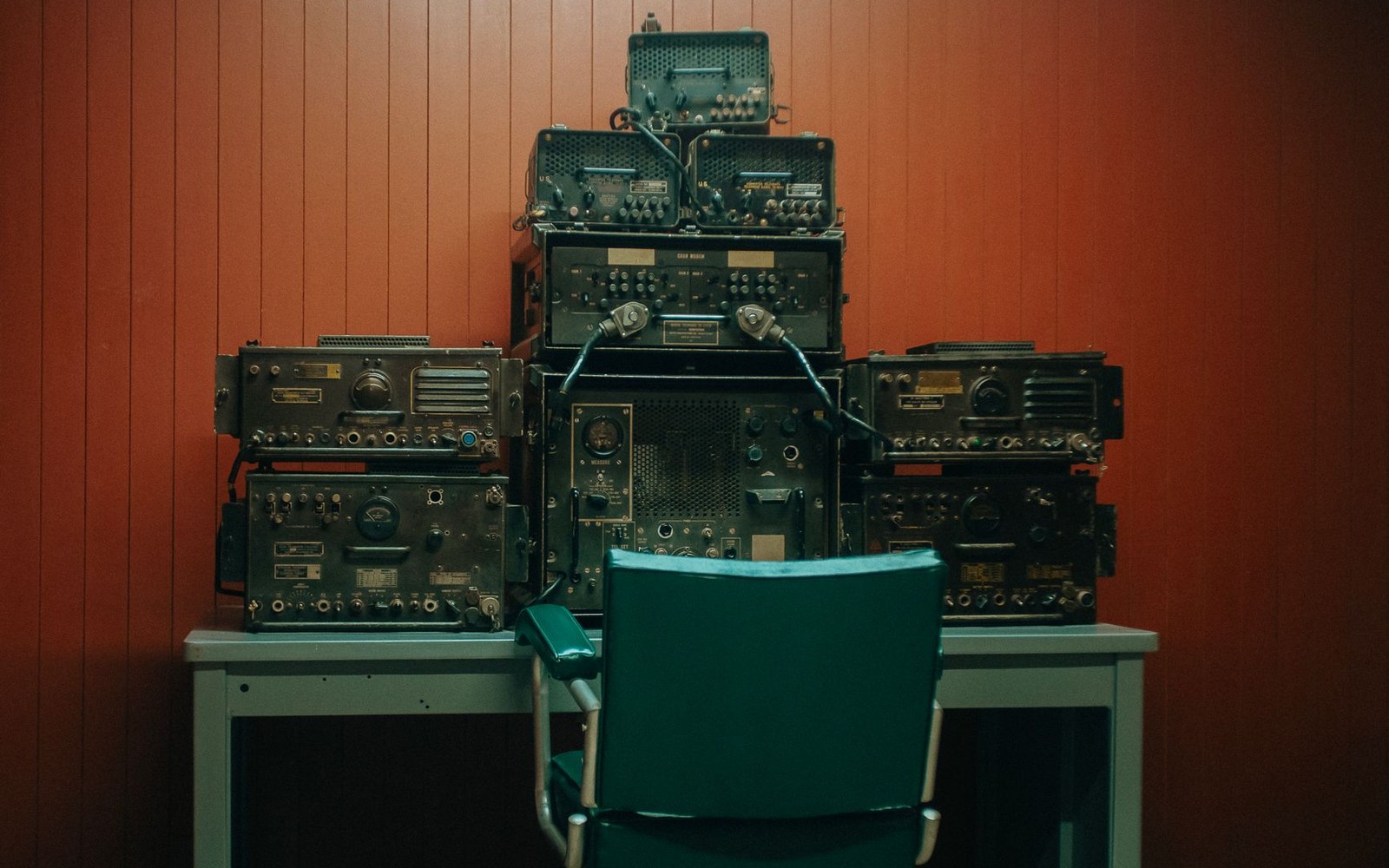
The independent tradition did not begin when the presses stopped and did not end there either. KPFA went on air in Berkeley on 15 April 1949 as the first listener-supported station in the United States, built by Lewis Hill and the Pacifica Foundation on the argument that advertising revenue distorted what got broadcast.
I. F. Stone published his Weekly from 1953 to 1971 out of public documents alone. Maximumrocknroll ran monthly from 1982 to issue 432 in May 2019. Indymedia opened in Seattle in November 1999 with software that let any registered user publish to the front page. ProPublica began publishing in June 2008 on a $10 million annual grant, the Texas Tribune in November 2009, and Substack opened in 2017 on a ten per cent share of subscription revenue.

Listener-funded
KPFA 1949, Pacifica, community radio.
Zines
Maximumrocknroll 1982–2019, Factsheet Five, Punk Planet.
Nonprofit newsrooms
CIR 1977, ProPublica 2008, the Texas Tribune 2009.
Newsletters
I. F. Stone from 1953, Patreon 2013, Substack 2017.
- The Station That Started Before the Format DidKPFA in Berkeley, California, launched on 15 April 1949 as the first listener-supported radio station in the United States, founded by Lewis Hill on the premise that advertising revenue distorted broadcast content — a structural argument that predated the nonprofit media debates of the 2000s by half a century.Standard piece
- Every Weekday Since 1996Democracy Now! launched on 19 February 1996 as an election-coverage special on Pacifica Radio stations and became a daily independent news programme, expanding to television and podcast distribution while remaining funded by listeners and foundations rather than advertising.Short piece
- A Server, a Camera and the WTOThe Independent Media Center — Indymedia — launched in Seattle in November 1999 to cover the World Trade Organization ministerial conference, using open-publishing software that allowed any registered user to post text, audio or video directly to the front page without editorial gatekeeping.Standard piece
- Investigative Journalism as a Tax-Exempt ActivityProPublica launched in June 2008 funded by a $10 million annual grant from Herbert and Marion Sandler, establishing a newsroom explicitly organised around the 501(c)(3) model — investigative journalism as a charitable activity — at the moment print newsrooms were cutting investigative desks fastest.Standard piece
- The State Capital Beat Nobody Was Paying ForThe Texas Tribune launched in November 2009 as a nonprofit, nonpartisan digital newsroom covering Texas politics and policy, founded by Evan Smith, John Thornton and Ross Ramsey on the premise that state-capital journalism was the category most rapidly abandoned by shrinking commercial papers.Short piece
- The Inbox Made It Personal AgainSubstack launched in 2017 with a revenue-share model that allowed individual writers to charge subscribers directly via email newsletter, reviving a distribution format — the paid subscriber letter — that predated the commercial web; by 2021 the platform reported more than one million paid subscriptions across its top writers.Standard piece
- Downloaded Five Million Times Before the Fifth EpisodeSerial, produced by Sarah Koenig and Julie Snyder as a spinoff of This American Life, launched on 3 October 2014 and reached five million downloads faster than any podcast previously recorded — a milestone Apple confirmed publicly in November 2014.Standard piece
- Every Month From 1982 to 2019Maximumrocknroll published continuously from its first issue in 1982 until issue 432 in May 2019, operating as a volunteer-run, advertiser-supported print zine without a corporate owner throughout its thirty-seven-year run — one of the longest continuous publication records in the American independent press.Short piece
- Four Pages, Twice a Month, No Press Pass NeededI. F. Stone published I. F. Stone's Weekly from 1953 to 1971 as a four-page newsletter written, edited and mailed by Stone alone, relying entirely on public documents — congressional records, government reports, press releases — at a time when Washington correspondents depended on access that could be revoked.Short piece